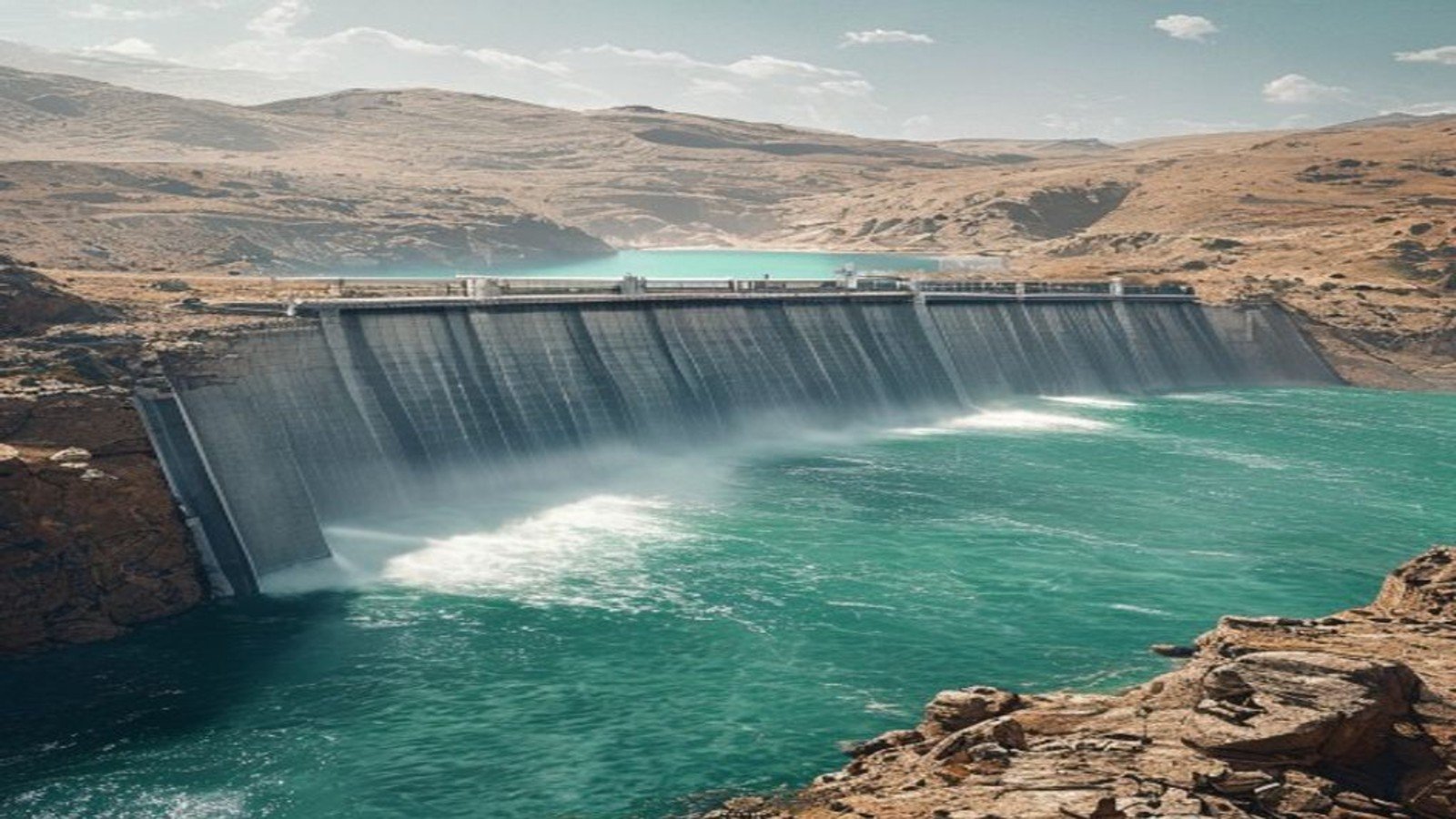
The Nile supports well over a quarter of a billion people across eleven basin countries, and for most of the twentieth century its waters were allocated by agreements that upstream states never signed. The construction of a large hydroelectric dam on the Blue Nile in Ethiopia turned that latent dispute into an active one, and the result is a case study in how climate stress and infrastructure interact with international law.
Two rivers, one delta
The Nile has two main branches. The White Nile rises in the equatorial lakes region and provides a relatively steady baseflow. The Blue Nile rises in the Ethiopian highlands and, fed by monsoon rains, contributes the large majority of total annual flow along with the seasonal flood pulse that historically fertilized Egyptian agriculture. The two join at Khartoum before running north through Sudan and Egypt.
Read more
Why the Arctic Is Becoming a Contested Shipping Route
That hydrology explains the politics. Ethiopia generates most of the water but historically used little of it. Egypt, with almost no rainfall, depends on the river for the overwhelming majority of its freshwater and reached the point of using essentially its entire allocation.
Agreements without upstream consent
Colonial-era and mid-century treaties allocated the river’s flow primarily between Egypt and Sudan, with Egypt receiving the larger share and a claimed right of prior notification over upstream works. Ethiopia was not a party. Upstream states have long regarded those instruments as inapplicable to them, and several later signed a cooperative framework agreement that Egypt and Sudan declined to join.
International water law offers principles rather than answers. The relevant convention frameworks emphasize equitable and reasonable utilization alongside an obligation not to cause significant harm, two standards that can point in opposite directions when a basin is fully allocated. Background on transboundary water law is maintained by the UN-Water coordination mechanism.
Read more
The Global Food Chain: How Grain Moves, Where It Breaks
The dam and the filling question
Ethiopia’s project is primarily a hydropower dam, meaning water passes through turbines rather than being consumed. Over the long run, generation does not reduce the volume reaching downstream countries, and a large upstream reservoir can even reduce evaporation losses compared with storage in hotter climates and buffer downstream flows during drought.
The contested issues were timing and control. Filling a very large reservoir removes water from the annual flow while it fills, and the faster the fill, the sharper the downstream impact. Egypt sought a binding, long filling schedule with drought-triggered release guarantees; Ethiopia insisted on operational sovereignty and guidelines rather than a treaty. Negotiations under African Union auspices produced technical convergence but no signed agreement.
Why Egypt considers it existential
Egypt’s position reflects arithmetic rather than rhetoric. Per-capita renewable water availability there is well below the conventional scarcity threshold and falling as population grows. Agriculture consumes most of the supply, and the Nile Delta simultaneously faces saltwater intrusion and subsidence, which reduces effective farmland. Any reduction in reliable inflow, even temporary, translates into fallowed land and food imports. Regional water stress indicators are tracked by the World Bank water practice.
Read more
Antibiotic Resistance: How Bacteria Outrun Our Best Drugs
Ethiopia’s development case
Ethiopia’s argument is equally concrete. A large share of its population historically lacked reliable electricity, and hydropower is the country’s most abundant domestic energy resource. The dam roughly doubles national generating capacity on paper and creates an export commodity for neighboring grids. From Addis Ababa’s perspective, being asked to leave that resource unused to preserve allocations set by agreements it never joined was never a viable position.
The broader pattern
Roughly two-thirds of the world’s large rivers cross international borders, and most lack a comprehensive basin treaty with all riparian states as parties. As demand rises and precipitation patterns shift, similar disputes are emerging on the Mekong, the Indus, the Tigris-Euphrates and the Amu Darya.
The Nile case suggests both a warning and a modest hope. Infrastructure built before agreement creates facts that law then has to accommodate. But the dispute also produced years of technical cooperation on data sharing and drought definitions, and no violence. In transboundary water, that is closer to the norm than the alarmist framing usually allows. Basin-level water accounting compiled by FAO AQUASTAT shows how thin the margins in the basin have become.