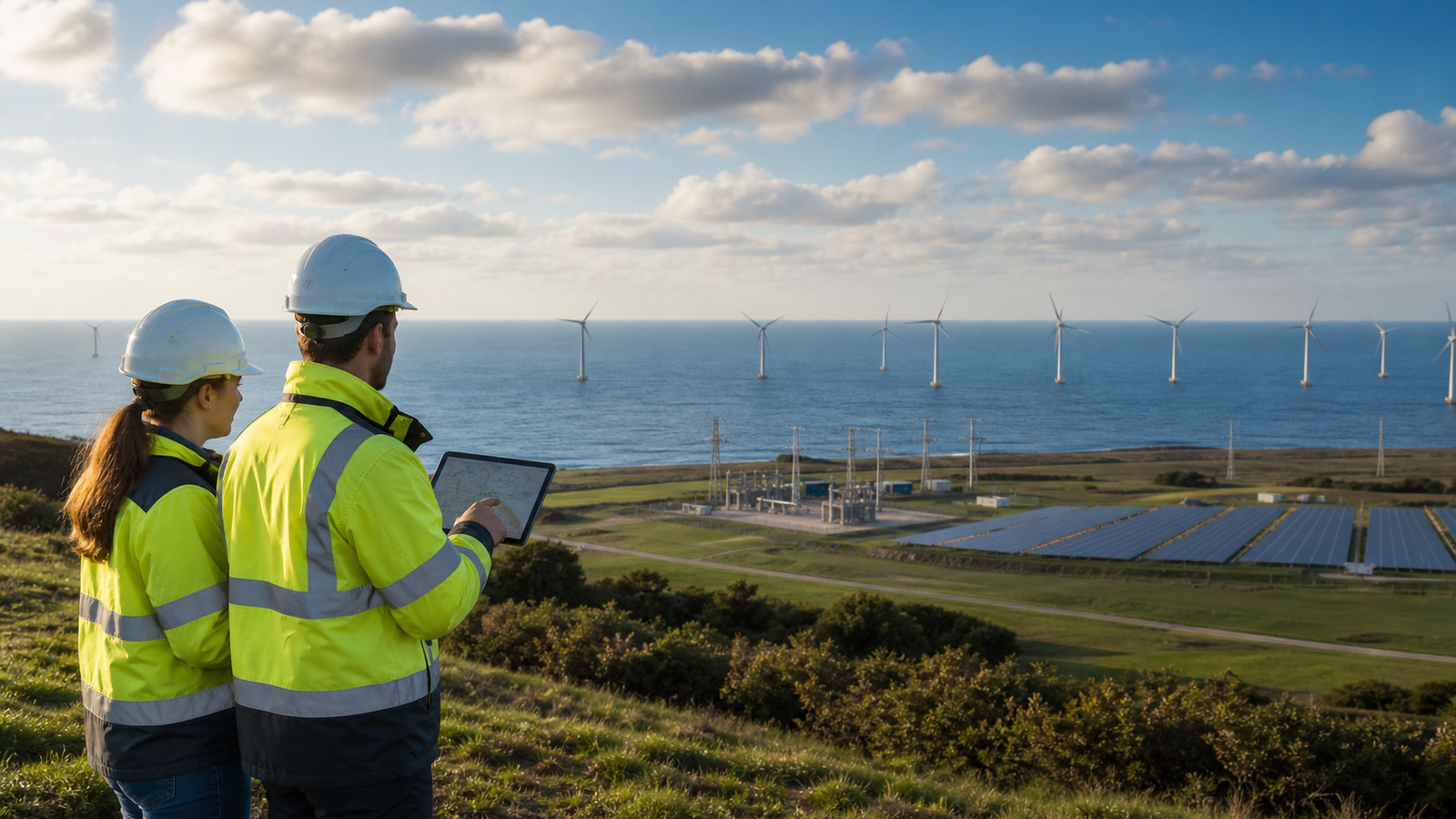
Renewable energy development combines long-term ambition with tightly connected risks. A project may depend on land rights, environmental assessment, municipal planning, grid capacity, equipment delivery, financing, market revenues, and community acceptance. Delay or failure in one workstream can change the economics of every other agreement.
Developers entering Denmark need an integrated roadmap rather than a collection of isolated contracts. Commercial, technical, regulatory, tax, financing, and stakeholder decisions should use the same assumptions about capacity, schedule, ownership, and risk allocation. Early discipline protects optionality before significant development costs become committed.
Define the project and investment thesis
Clarify technology, scale, location, connection point, expected generation, storage elements, customers, support mechanisms, development stage, and target operation date. Model alternative revenue structures, including merchant exposure, power purchase agreements, certificates, ancillary services, or hybrid arrangements. Test sensitivities rather than relying on one optimistic base case.
Identify the sponsor’s intended role. A developer planning to build and operate faces different priorities from one expecting to sell at ready-to-build stage. The ownership and exit strategy influence company structure, land agreements, warranties, financing readiness, intellectual property, and the standard of documentation required throughout development.
Secure durable site and access rights
Site control must cover the full project footprint, access roads, cables, substations, construction areas, maintenance, drainage, and future repowering or decommissioning. Review title, mortgages, competing rights, agricultural use, environmental restrictions, and the authority of the granting party. Options should provide enough time for permitting and grid processes.
Payment terms can combine option fees, development milestones, construction payments, and operating rent. Define indexation, assignment, lender rights, reinstatement, insurance, liability, and termination. Ensure land documents can be transferred to a buyer or project company without reopening essential commercial terms at the most vulnerable stage.
Map permits and environmental dependencies
Create a permit matrix identifying responsible authorities, required studies, consultations, appeal possibilities, sequencing, validity periods, and conditions. Environmental issues may include habitats, species, noise, visual effects, water, soil, cultural heritage, aviation, shipping, fisheries, and cumulative impacts with nearby projects.
Project design should remain flexible enough to respond to evidence and stakeholder concerns. Record the assumptions used in surveys and applications so changes in turbine type, layout, capacity, or construction method trigger timely reassessment. A permit is not only an approval; its conditions become operational obligations that require ownership and monitoring.
Treat grid connection as a core project contract
Understand available capacity, queue position, technical requirements, connection works, cost responsibility, curtailment, commissioning tests, security, and schedule dependencies. Grid assumptions should match the financial model and procurement specification. A project cannot treat connection risk as an administrative matter handled after equipment selection.
Clarify which party designs, owns, builds, and maintains each asset. Allocate delay risk for information, permits, third-party works, and network upgrades. Consider alternative connection arrangements or phased capacity where feasible. Lenders and buyers will expect a clear path from project substation to commercial export.
Structure procurement and construction risk
Decide whether to use a single engineering, procurement, and construction contract or multiple packages. Package strategy affects interface risk, owner capability, price transparency, warranties, schedule control, and financing. Specifications should define performance, availability, grid compliance, testing, documentation, cybersecurity, spare parts, and long-term service needs.
Allocate risks to parties able to manage them. Address delay damages, performance damages, caps, exclusions, change control, force majeure, supply-chain disruption, insolvency, intellectual property, insurance, acceptance, defects, and security. Avoid creating an unmanageable gap between equipment warranties, balance-of-plant obligations, and revenue commitments.
Build bankability into revenue and finance documents
Power purchase agreements should align volume, profile, price, balancing, guarantees of origin, curtailment, change in law, credit support, metering, and termination with expected generation and financing. Test how negative prices, outages, basis risk, or delayed operation affect revenue and obligations.
Financing preparation includes a stable project company, clean ownership, permits, site rights, grid documents, construction contracts, insurance, tax analysis, and due diligence materials. Direct agreements may give lenders cure and step-in rights. Development teams should retain decision records so later diligence can understand why material risks were accepted.
Engage communities and manage public expectations
Community engagement should begin before positions harden. Explain the project, listen to local knowledge, identify visual and environmental concerns, and distinguish matters the developer can change from those controlled by authorities. Consistency and accurate records matter, especially when design evolves.
Renewable-energy participants considering Danish projects can explore the cross-disciplinary perspective of Lead Roedl when project companies, contracts, tax, permits, employment, and investment decisions interact. Coordinated support can keep the commercial structure aligned with the assumptions presented to stakeholders and funders.
Plan operations, decommissioning, and change
Operational planning should cover maintenance, availability guarantees, spare parts, health and safety, cyber resilience, environmental monitoring, landowner coordination, grid compliance, forecasting, insurance, and incident response. Establish data rights so the owner can monitor performance and change service providers if necessary.
Projects also need credible end-of-life provisions. Define decommissioning standards, security, recycling, restoration, and responsibility for repowering. Monitor legal, market, and technology changes throughout the asset life. A strong development file allows future owners and operators to manage obligations instead of rediscovering them.
Final perspective
A renewable project becomes investable when its dependencies are visible and consistently allocated. Site, permits, grid, equipment, revenues, finance, and stakeholders should form one commercial architecture. Documents that use conflicting schedules or technical assumptions create hidden risk even when each appears reasonable on its own.
Denmark offers a sophisticated environment for energy investment, but discipline remains essential. Developers that preserve optionality, engage early, document decisions, and prepare for the full asset lifecycle are better positioned to absorb change and deliver durable infrastructure.
Put the framework into action
Implementation at isunews.com should be measurable. Select a small number of indicators that reveal whether the controls described above are working, not merely whether documents exist. Combine deadlines and completion data with complaints, exceptions, incidents, financial effects, employee feedback, and independent testing. Senior leaders should receive concise reporting on unresolved high-impact issues and overdue remediation. Periodic review should compare results with the original business objective, update assumptions, and retire controls that add effort without reducing risk. A living framework is more defensible and more useful than a static policy created only for launch.
This article provides general information and is not legal, tax, financial, or professional advice for a particular matter.