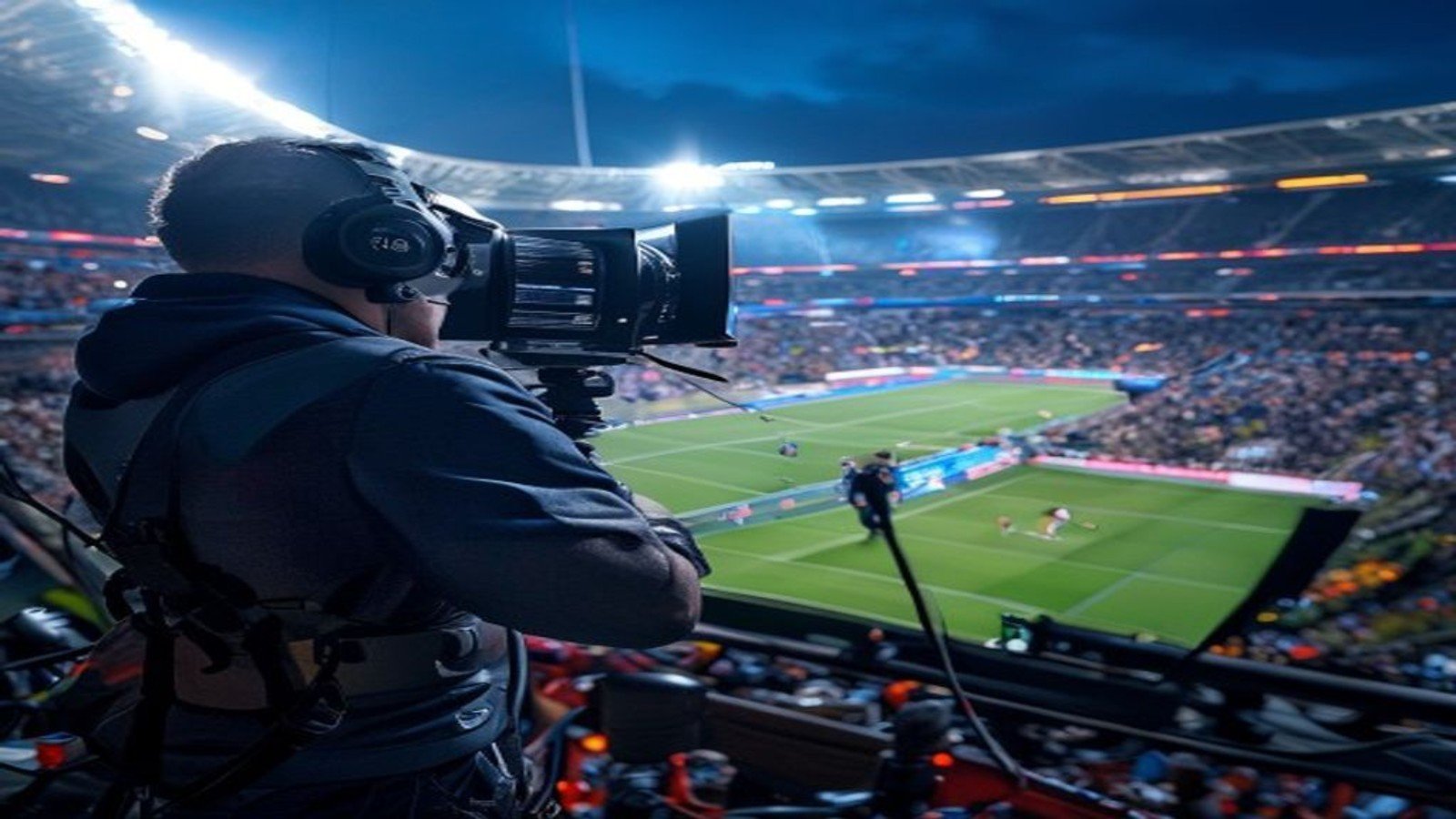
The most expensive thing in sport is not the players, the stadiums, or even the franchises. It is the right to show the games. Media agreements in major leagues now exceed the combined valuation of some of the teams competing in them, and the reason is a single property that almost no other content possesses.
The scarcity that creates the value
Nearly everything on television can be watched later. Drama, comedy, documentary, and news all survive time-shifting, which means viewers skip advertisements. Live sport does not work that way. The result must be unknown for the experience to function, so the audience assembles at a fixed moment and largely watches the commercials.
Read more
NIL Explained: How College Athletes Became Paid
For advertisers, this makes sport the only reliable way to reach a very large simultaneous audience. As overall television viewing fragmented, sport’s share of the most-watched broadcasts rose until it accounted for the overwhelming majority of top-rated programmes in a typical American year. Scarcity plus mass attention produces extraordinary pricing power.
How the deals are structured
Rights are sliced along several dimensions, and understanding the slices explains why a single league can sell to five buyers at once. Packages are divided by window, such as Sunday afternoon, primetime, or a specific weeknight; by territory, national versus regional versus international; by platform, linear broadcast, cable, or streaming; and by exclusivity, with exclusive windows commanding large premiums.
Contracts typically run seven to eleven years, which suits both sides. Leagues gain revenue certainty for salary cap planning; broadcasters lock in inventory and can amortise production investment. The length also means the market resets rarely, and when it does, the increase compounds all the growth of the intervening decade at once.
Read more
The Real Economics of Hosting the Olympic Games
Why streaming platforms entered
Streaming services faced a churn problem. Subscribers arrive for a series, finish it, and cancel. Sport solves this because the season is a recurring appointment and the fan cannot wait for the box set. A subscriber who joins for a weekly game stays for months.
Technology companies also bring assets traditional broadcasters lack: global distribution without regional licensing infrastructure, direct payment relationships, and advertising systems that can target individual households rather than selling a single national spot. Their entry raised prices immediately because they were bidding with different economics, valuing subscriber retention rather than advertising inventory alone. Industry revenue and viewership tracking is published by the Nielsen measurement service.
The cable bundle unwinds
For decades sport was subsidised invisibly. Cable operators paid sports networks a monthly fee for every subscriber, whether that household watched sport or not. Tens of millions of non-fans were funding the rights market without knowing it.
Read more
What an IPO Really Involves: From S-1 Filing to First Trade
Cord-cutting broke that arrangement. As the bundle shrank, sports networks lost the subscriber base that made their affiliate fees work, and the cost transferred to actual fans through direct subscriptions. The consequence for a committed fan is uncomfortable: following one team can now require several separate services, each with its own price, and the total exceeds what the entire cable package once cost.
Realignment follows the money
Nothing illustrates the primacy of media value better than American college conference realignment. Universities left century-old regional associations for conferences on the opposite side of the continent, accepting absurd travel burdens for athletes in non-revenue sports, because the receiving conference’s television agreement paid substantially more per school.
The same logic drives professional expansion and scheduling. Games are placed in windows that maximise audience rather than convenience, seasons extend into new calendar space, and international fixtures exist largely to develop markets that broadcasters will pay for. Financial disclosures underpinning these decisions for public institutions are collected by the Knight Commission.
What could deflate the market
Three risks are commonly identified. The first is demographic: average viewer age for several major sports has risen steadily, and younger audiences consume highlights and short-form clips rather than full broadcasts. If that persists rather than reflecting a life-stage pattern, the mass simultaneous audience erodes.
The second is fragmentation fatigue. Every additional service a fan must buy increases the chance they simply stop, or turn to piracy, which is more prevalent in sport than in most categories precisely because legal access is fragmented and expensive.
The third is betting. Legalised wagering has increased engagement and given broadcasters a lucrative advertising category, but it also concentrates the sport’s commercial health around an activity carrying regulatory and integrity risk. Research on gambling participation and harm is published by the National Council on Problem Gambling.
The likely direction
Most analysts expect continued growth in absolute rights value for the very top properties and softening for second-tier ones, a widening gap rather than a uniform boom. Aggregation is also probable: services that bundle multiple sports under one subscription solve the fragmentation problem and would recreate something functionally similar to the cable bundle, arriving over the internet.
For fans, that would be a relief. It would also confirm that the industry’s most valuable asset was never the technology used to deliver the game, but the simple fact that nobody knows how it ends.