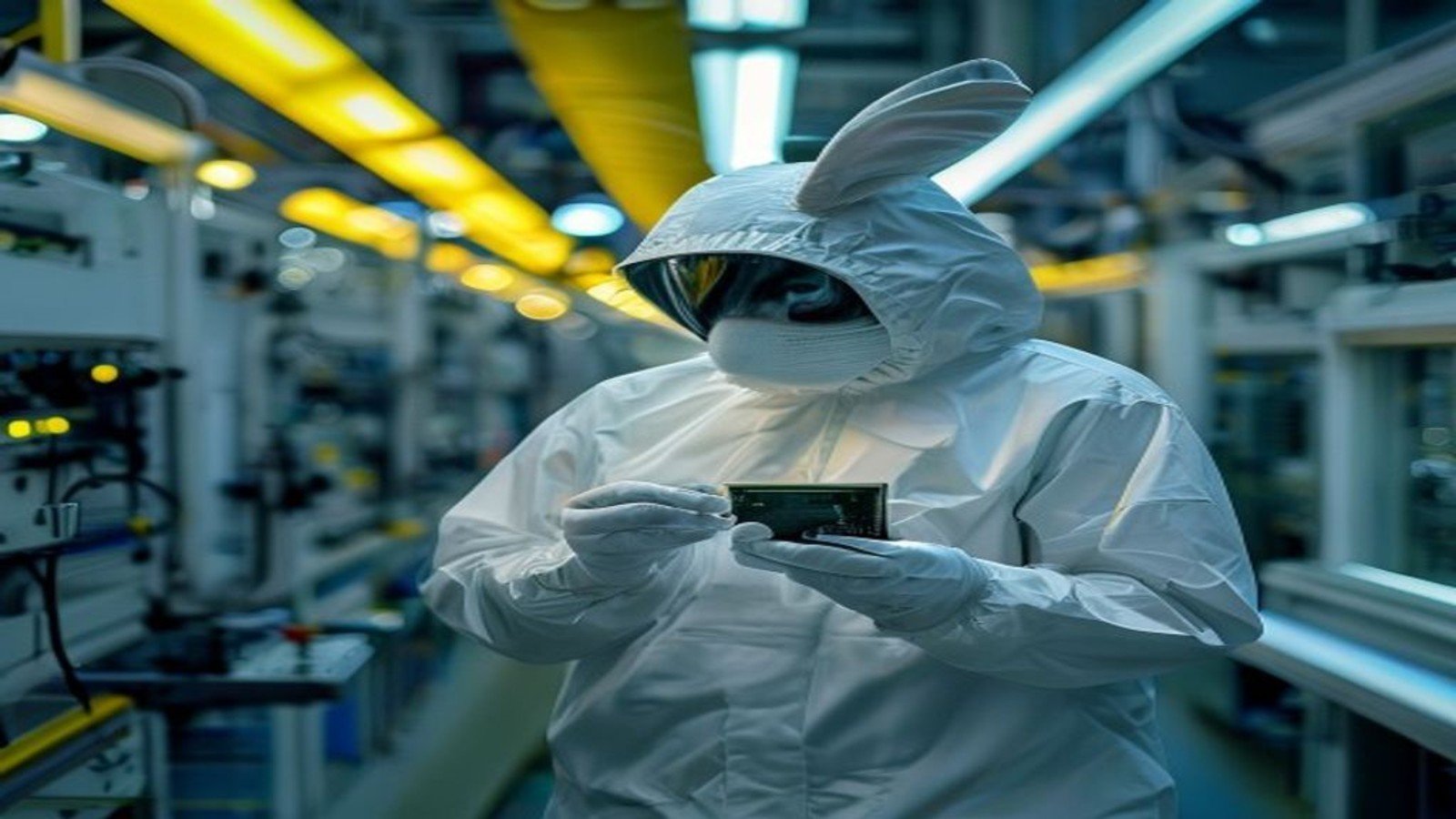
Semiconductors are the most complex objects manufactured at scale, and the industry that produces them is among the most concentrated in the world economy. A modern logic chip may cross international borders more than fifty times between raw wafer and finished package. Every stage of that journey has a small number of viable suppliers, and in some cases exactly one.
Design, fabrication and packaging
The industry separates into three broad functions. Fabless design companies create circuit architectures and license instruction sets. Foundries manufacture wafers to those designs in facilities costing well over ten billion dollars each. Assembly, test and packaging firms cut wafers into dies and encase them.
Read more
What an IPO Really Involves: From S-1 Filing to First Trade
A handful of integrated device manufacturers still design and fabricate in-house, but the dominant model since the 1990s has been separation, which allowed design firms to avoid capital expenditure while foundries achieved scale. Industry statistics and capacity data are published by the Semiconductor Industry Association.
The lithography bottleneck
The narrowest point in the entire chain is extreme ultraviolet lithography, the technology required to pattern the smallest features on leading-edge chips. Exactly one company in the world produces EUV scanners. Each machine costs upward of a hundred fifty million dollars, contains tens of thousands of components sourced globally, and requires plasma light sources and mirror optics manufactured to atomic tolerances.
That single-supplier structure is why export controls on lithography equipment became such an effective policy instrument. Restricting a machine that cannot be substituted does more to constrain capability than restricting finished chips, which have many sources.
Read more
How the Federal Reserve Sets Interest Rates
Geographic concentration
Leading-edge logic fabrication is concentrated in East Asia, with the most advanced nodes produced in a small number of facilities. Memory manufacturing is similarly clustered. Advanced packaging capacity, increasingly the performance-limiting step for artificial intelligence accelerators, is also concentrated.
The vulnerability is not primarily commercial but physical. Fabs require enormous quantities of ultrapure water, exceptionally stable electricity, and specialized workforces. They cannot be relocated quickly, and building a new one takes three to five years even with committed funding and permits. Trade dependency analysis is published by the OECD.
Materials and specialty inputs
Beyond equipment, production depends on inputs with concentrated sourcing: high-purity silicon wafers, photoresists, specialty gases including neon and certain fluorinated compounds, and rare earth elements used in magnets and polishing compounds. Several of these have production concentrated in one or two countries.
Read more
Ransomware: How Attacks Unfold and How Organizations Recover
Disruptions in these markets have caused real slowdowns. Because inputs are consumed in small volumes relative to their criticality, buyers historically held thin inventories, and that practice has been reconsidered across the industry.
Industrial policy returns
Governments across North America, Europe and Asia have responded with subsidy programs for domestic fabrication, research funding and workforce development. The stated goals are resilience and security rather than autarky, since full self-sufficiency at leading edge is generally regarded as economically prohibitive.
Early results show new facilities under construction alongside cost overruns, labor shortages and timeline slippage. The strategic logic and the execution difficulty are both real. Comparative assessments of these programs are tracked by the World Trade Organization in its trade policy reviews.
Where demand is heading
Artificial intelligence workloads have shifted demand toward high-performance accelerators, high-bandwidth memory and advanced packaging, straining exactly the parts of the chain with least spare capacity. Meanwhile automotive and industrial customers depend heavily on mature nodes, where the economics of new investment are less attractive.
The result is a market that can be simultaneously short of advanced capacity and oversupplied at trailing nodes. Anyone reading a headline about a chip shortage or glut should ask which node, because the two segments now behave almost independently.