For two decades data center electricity consumption stayed remarkably flat even as internet traffic exploded, because efficiency gains offset volume growth. That decoupling has ended. Accelerated computing for artificial intelligence draws far more power per rack than conventional servers, and utilities across several regions are now revising long-term load forecasts upward for the first time in a generation.
Why AI hardware changes the arithmetic
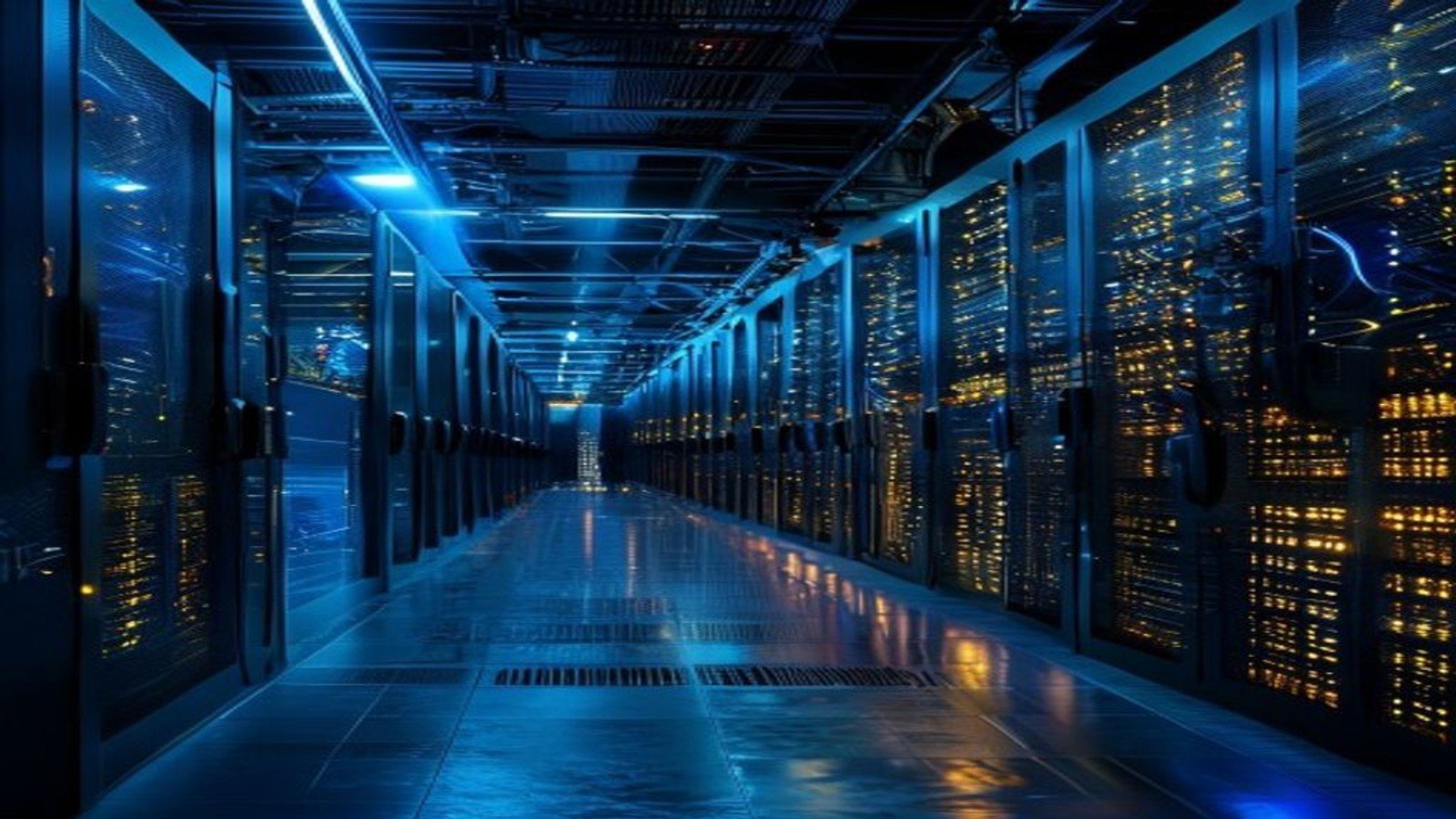
A traditional server rack might draw five to ten kilowatts. Racks packed with AI accelerators can draw many times that, with some designs exceeding a hundred kilowatts. Power density of that magnitude changes the building itself: electrical distribution, cooling architecture and floor loading all have to be designed differently.
Read more
Ransomware: How Attacks Unfold and How Organizations Recover
Air cooling reaches practical limits at high density, pushing operators toward direct-to-chip liquid cooling or immersion. Those systems are more efficient thermodynamically but add plumbing complexity and new failure modes. Analysis of energy trends in computing is published by the International Energy Agency.
Measuring efficiency honestly
The standard industry metric is power usage effectiveness, the ratio of total facility power to power delivered to computing equipment. Modern hyperscale facilities report figures close to the theoretical floor, meaning overhead has already been squeezed hard.
That success creates a measurement trap. Because overhead is already minimal, further efficiency must come from the computing itself: better chips per unit of work, better model architectures, and better utilization. Reporting a low overhead ratio says nothing about whether the underlying computation was necessary.
Read more
What Quantum Computing Can and Cannot Do Today
Water, not just power
Evaporative cooling trades electricity for water, and in water-stressed regions that tradeoff draws local opposition. Consumption varies enormously by design and climate: closed-loop and air-cooled facilities use far less water but more electricity, while evaporative systems do the reverse.
Several operators have begun publishing water usage effectiveness alongside power metrics and committing to replenishment targets. Local disclosure remains uneven, which is often the specific complaint in siting disputes.
The interconnection queue
The binding constraint on new capacity is frequently not chips or capital but grid connection. Requests to connect large loads and new generation sit in interconnection queues managed by transmission operators, where studies of system impact can take years. Queue volumes have grown to many times the capacity actually built.
Read more
CRISPR Gene Editing Explained: What It Can and Cannot Do
Transmission construction is slower still, involving multi-state siting, environmental review and cost allocation disputes. Reliability assessments covering these pressures are published by the North American Electric Reliability Corporation.
How operators are responding
Strategies fall into a few categories. Some developers site facilities adjacent to existing generation, including nuclear plants, to avoid transmission constraints. Others sign long-term power purchase agreements for new wind, solar and storage to match consumption on an annual or hourly basis. On-site generation, grid-interactive batteries and demand flexibility are being tested to allow load reduction during system peaks.
Nuclear has re-entered the conversation, both through uprates and life extensions at existing plants and through small modular reactor proposals that remain years from commercial delivery at scale.
Who pays for the grid
The regulatory question now facing utility commissions is cost allocation. If a single large customer requires substantial network upgrades, existing ratepayers should not necessarily fund them, but large loads also spread fixed costs across more sales, which can lower average rates.
Several states are developing special tariff classes for very large loads, with minimum-take provisions, upfront contributions and curtailment obligations. Regulatory filings and rate case materials are collected by the Federal Energy Regulatory Commission for interstate matters.
The efficiency counterweight
Forecasts of runaway consumption should be read cautiously. Each hardware generation delivers substantially more computation per watt, model architectures are becoming more efficient through techniques like sparsity and quantization, and a large share of inference is shifting to smaller distilled models. Historically, computing demand projections have overshot because they extrapolated current efficiency.
The honest summary is that growth is real and rapid, the constraint is grid infrastructure rather than energy resources in aggregate, and the outcome depends on how quickly transmission and generation can be built relative to how quickly efficiency improves.